Panic · 8 min read
Waking in Panic at Night: What It Means and What Can Help
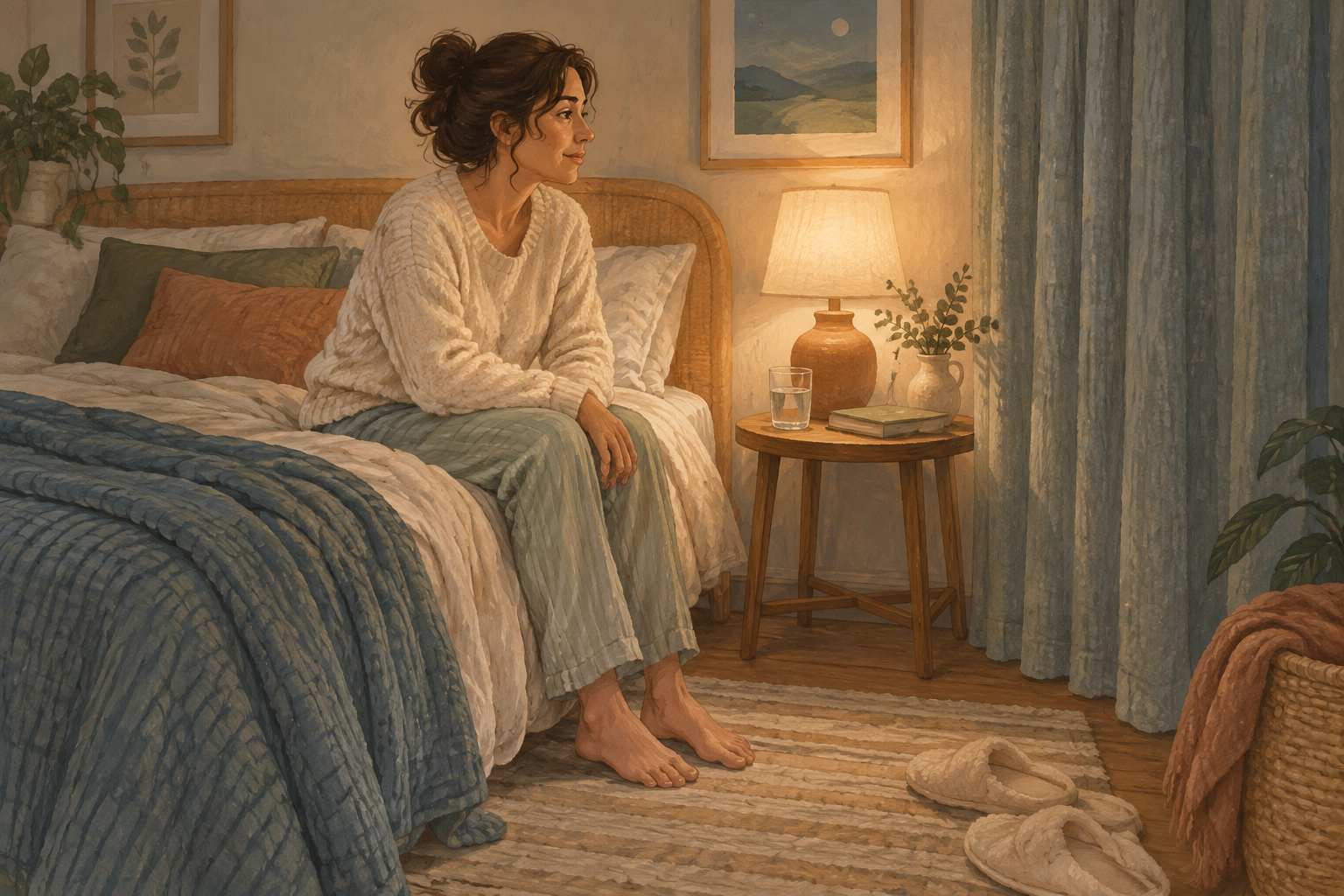
You were asleep, and suddenly you are wide awake with a racing heart and a strong sense that something is wrong. Waking in panic can feel especially frightening when the room is quiet and everyone else seems to be resting. You deserve support with both the frightening awakening and the worry about another night.
Panic can wake you without a nightmare
A nocturnal panic attack is an episode of panic that wakes someone from sleep. It can involve a pounding heart, sweating, trembling, breathlessness or intense fear, without a remembered nightmare. Cleveland Clinic (US) describes these episodes as similar to daytime panic attacks, except that they interrupt sleep. The experience is real, even when there is no obvious frightening event to explain it.
That does not mean every sudden awakening is panic, or that one episode means you have panic disorder. NIMH (US) distinguishes an occasional panic attack from panic disorder, which involves recurrent unexpected attacks alongside ongoing worry or changes in behaviour. You do not need to settle on a diagnosis in the middle of the night. For now, it is enough to notice what happened and consider whether medical assessment is needed.
Leave room for explanations other than anxiety
A racing heart or difficulty breathing at night should not automatically be labelled anxiety. A clinician may need to consider other explanations, particularly if this is new, recurring or different from your usual experience. Cleveland Clinic (US) notes that assessment can include ruling out other health conditions. Having anxiety does not remove your right to have unfamiliar symptoms taken seriously.
One possibility worth mentioning is sleep apnoea. NHS (UK) guidance lists breathing that stops and starts, gasping or choking noises, loud snoring and daytime tiredness among its signs. These do not prove sleep apnoea, but they are useful reasons to arrange an assessment. If someone has noticed pauses in your breathing, tell the clinician rather than assuming panic explains everything.
If you have new or severe chest pain, severe breathing difficulty, fainting, or symptoms that could be a medical emergency, contact local emergency services. Do not wait for a relaxation exercise to work. For non-emergency concerns, use a primary-care clinician or your local equivalent; routes into sleep assessment differ between countries.
Separate the episode from the rest of the night
The sudden surge and the wakefulness afterwards are not necessarily the same thing. Cleveland Clinic (US) explains that nocturnal panic symptoms usually peak within minutes, while returning to sleep can take longer. Feeling unsettled afterwards does not, by itself, mean the episode is still intensifying. Equally, a clock cannot tell you whether unfamiliar symptoms are safe.
NIMH (US) describes how worry about another attack can become part of panic disorder. At night, that worry may sound like, ‘What if it happens as soon as I drift off?’ You might notice yourself watching the clock, delaying bedtime or treating every change in your heartbeat as a warning. If that sounds familiar, it is useful information to share with a professional—not evidence that you are handling this badly.
Try keeping two modest aims separate: respond to the awakening, then make room for rest. You do not have to achieve immediate sleep to have responded kindly to yourself. A difficult night is not a test you have failed.

What helps: a small plan for a frightened awakening
If you have been assessed and recognise this as your usual panic pattern, a short plan can spare you some decisions. Healthdirect (Australia) recommends slow breathing and relaxation among ways of managing panic attacks. Gentle, unforced breathing can help some people; taking repeated large breaths or trying to reach a perfect rhythm is not the goal. If attending to your breathing makes you more frightened, you can leave that technique out.
A practical option is to sit comfortably, notice the room around you and read one brief reminder you wrote during the day. For example: ‘I recognise this pattern. I can follow my plan, and get medical help if something is new or different.’ You are not trying to argue yourself out of every sensation. You are choosing the next manageable action.
If the surge has eased but you are lying awake and becoming frustrated, NHS (UK) insomnia guidance advises against forcing sleep. If it is safe and practical, move to a comfortable place for a quiet activity and return to bed when you feel sleepier. Adapt this to your mobility, shared room or caring responsibilities; there is no need to turn it into another rigid rule.
- Keep the plan brief enough to read when tired.
- Use only enough light to move safely.
- Choose something quiet rather than work, news or an urgent search for explanations.
- Seek medical help if symptoms are new, severe or different from the pattern you have discussed with a clinician.
Make the next evening less of a test
After a frightening awakening, it is understandable to want a bedtime routine that guarantees it will not happen again. No routine can offer that certainty. Instead, choose one or two ordinary supports that fit your life. NHS (UK) insomnia guidance recommends a regular waking time, a wind-down period and avoiding caffeine close to bedtime. These measures can support sleep for some people, but they are not a cure for nocturnal panic.
Notice whether late caffeine, nicotine or alcohol may be relevant, without turning the next day into an investigation of everything you did ‘wrong’. The NHS advises avoiding these substances close to bedtime as part of insomnia self-care. If medicines seem connected to the awakenings, ask a pharmacist or prescriber; do not stop or alter prescribed treatment on your own.
A brief daytime note may be more useful than detailed overnight monitoring: roughly when you woke, what you noticed, and whether there was snoring, gasping or a recent medicine change. Exact timings are not essential. If recording starts making you more watchful or worried, keep it shorter or leave it for a conversation with a clinician.
Let Behind 6 be company, not another bedtime job
Behind 6 can be a gentle companion while you decide what you need. You might choose Stay With Me for company during a hard moment, or use My Safe Place for a familiar pause. Neither needs to become something you must complete before you are allowed to sleep. If opening a screen makes the night feel busier, a paper note may suit you better.
During the day, the journal can hold a short account of the awakening, and My Day can help you choose one manageable next step, such as arranging an appointment. If faith feels welcome, you might choose a Bible passage reference to return to later. If faith does not feel helpful tonight, leave that part aside. Behind 6 is a companion, not a medical assessment or a replacement for treatment.

When to get more help
Arrange professional support if the awakenings repeat, you begin avoiding sleep, or tiredness and fear are affecting daily life. You can also seek help after a single episode that concerns you. Mention both the physical symptoms and the effect on your nights. A simple opening is: ‘I am waking with intense fear and a racing heart, and I would like help understanding why.’
NIMH (US) and NHS (UK) describe cognitive behavioural therapy, or CBT, as an established treatment for panic disorder. It can help people work with frightening interpretations, avoidance and responses to bodily sensations. Medication is another option for some people, depending on assessment and preferences. Neither approach promises an instant result, and treatment should be discussed with a qualified professional.
Access varies by country. In England, some people can self-refer to NHS Talking Therapies; elsewhere, ask about your local primary-care or mental-health pathway. If distress includes thoughts of harming yourself or you cannot keep yourself safe, contact local emergency services or a crisis line. You do not need to manage that alone.
Choose one thing, then leave the plan alone
You do not need to take every suggestion into tonight. Choose one useful step: write a short bedside note, tell someone you trust what has been happening, or book an assessment. A plan can be small enough to fit on a card. It does not need to account for every possible sensation.
If you wake frightened again, that does not erase the care you have taken. You can return to the same simple plan, adjust it with professional support and let the next day be an ordinary day rather than a verdict on your progress. Rest and support are things you are allowed to need.
Sources and further reading
- Cleveland Clinic (US) — Nocturnal Panic Attacks
- NIMH (US) — Anxiety Disorders
- NHS (UK) — Panic disorder
- Healthdirect (Australia) — Panic attack
- NHS (UK) — Sleep apnoea
- NHS (UK) — Insomnia
This article is general information, not medical advice. If you're worried about your health, talk to a doctor.
Keep reading
Panic · 9 min
Fear of another panic attack: when going out feels difficult
Afraid of having a panic attack away from home? Understand the fear of fear, ease avoidance gently, and plan small outings without demanding instant calm.
Read article
Panic · 8 min
The 6 things behind a panic attack (and how to walk through one)
What actually happens in a panic attack — six things going on in your body and mind — and a calm, step-by-step way to walk through one.
Read article