Panic · 9 min read
Fear of another panic attack: when going out feels difficult
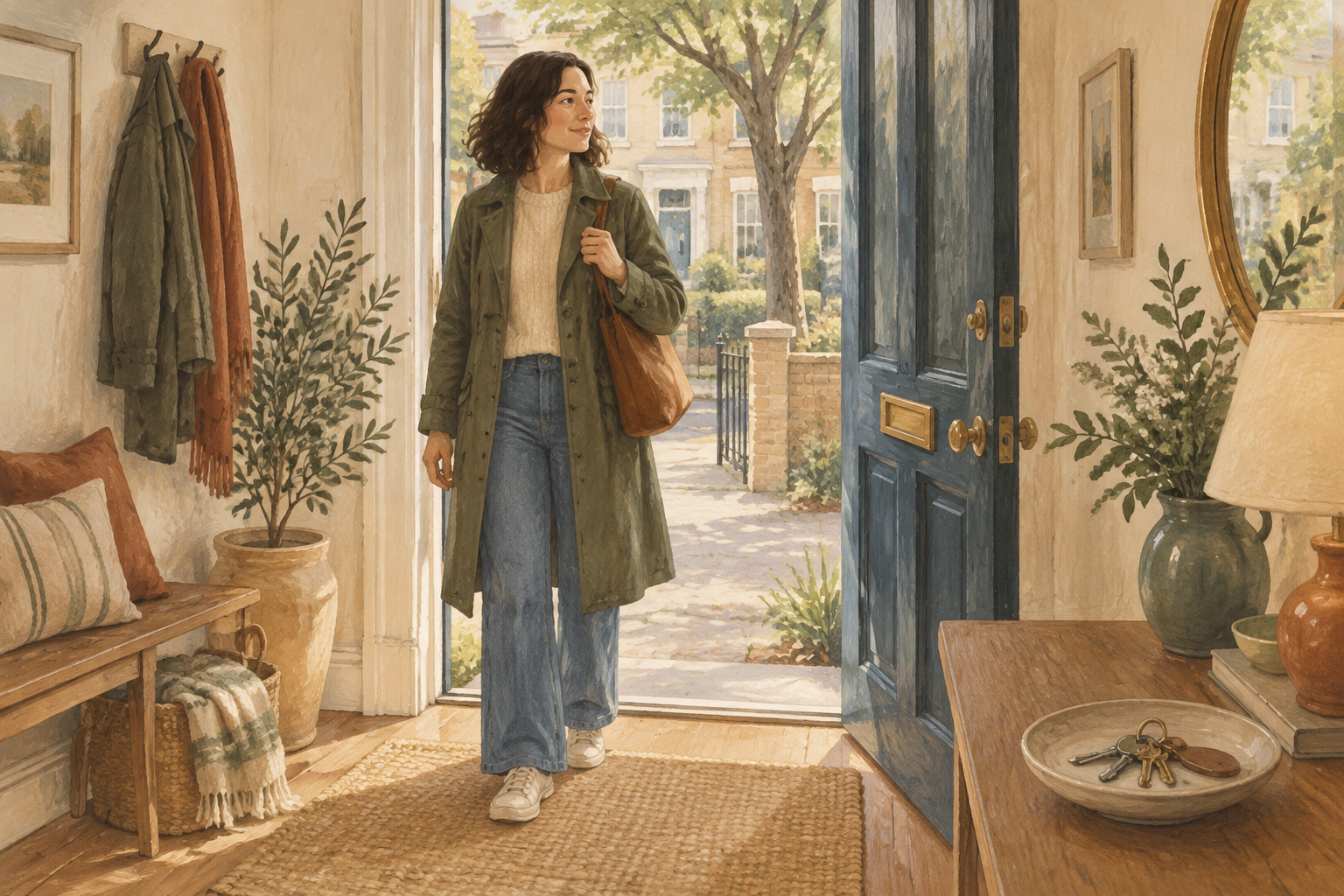
After a frightening panic attack, an ordinary journey can start to feel like a test: what if it happens on the bus, in the queue, or somewhere you cannot easily leave? You do not have to force yourself into a big outing or make yourself perfectly calm before taking your next small step.
When the next attack becomes the worry
Sometimes the hardest part of panic is the time between attacks. You may check how your body feels before leaving, picture yourself needing help in a crowded place, or cancel something you wanted to do. The question shifts from “Where am I going?” to “What if panic comes with me?”
NIMH (US) describes how worry about further attacks and changes in behaviour can become part of panic disorder. That does not mean one frightening attack gives you a diagnosis. Panic attacks can occur without panic disorder, and a professional assessment considers the wider pattern rather than one difficult day.
Naming the pattern can be useful: “I am frightened of having panic here.” That is more specific than “I cannot cope outside.” It leaves room for the possibility that a place feels threatening because of what you fear might happen there, not because you have lost the ability to go there.
Why certain places start to feel difficult
A supermarket queue, a train carriage and a seat in the middle of a row have something in common: leaving quickly may feel awkward. Healthdirect (Australia) explains that agoraphobia involves fear of situations where escape seems difficult or help might not be available if panic-like or other distressing symptoms occur.
It is not simply a fear of open spaces, and it is not always being unable to leave home. Public transport, crowds, enclosed spaces and being outside alone can become difficult in different combinations. You do not need to decide whether a label fits before asking for support.
Try noticing the feared event beneath the place: “I worry I will feel trapped”, “I worry people will stare”, or “I worry nobody will help.” This gives you something concrete to discuss with a clinician. It can also help you distinguish panic-related fear from a genuine access or safety problem, such as unreliable transport or a venue without the facilities you need.
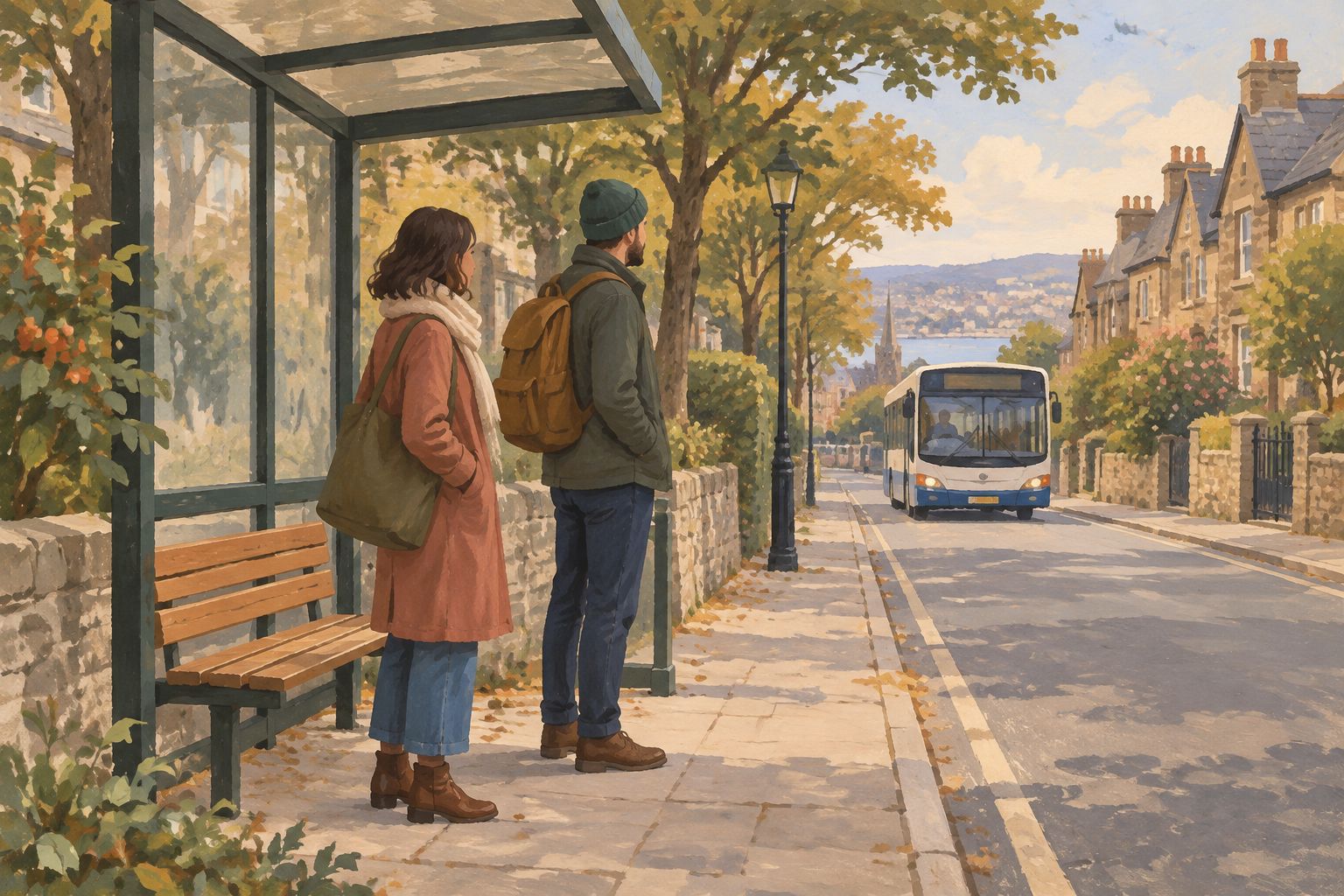
The relief of cancelling can have a cost
Cancelling an outing may bring immediate relief. That relief is real, and choosing it when overwhelmed is understandable. However, NHS (UK) guidance on agoraphobia describes how avoidance can keep feared situations difficult; never entering a situation leaves fewer opportunities to discover what actually happens there.
For some people, the conditions for going out become increasingly narrow: only with one particular person, only when completely calm, or only on a route with frequent exits. There is an important difference between helpful support and a rule that gradually makes life smaller. The difference is not always obvious, and it is worth exploring without self-criticism.
Do not suddenly remove everything that helps you function. Disability accommodations, prescribed medicines, mobility aids and reasonable safety planning are not failures. A therapist can help you understand which precautions meet a genuine need and which might be maintaining fear. The aim is more choice, not proving you can manage without support.
What helps: make the outing smaller, not yourself
Cognitive behavioural therapy, or CBT, is an established treatment for panic-related difficulties. NIMH (US) and WHO (global) describe exposure-based approaches that help people approach feared situations rather than consistently avoid them. This is structured learning, not being thrown into the most frightening situation and told to endure it.
For a modest everyday step, choose something meaningful, objectively safe and small enough to consider. That might be walking to the corner shop with someone you trust, rather than attempting a busy cross-city journey. Set a modest aim before you go, such as entering the shop and looking at one shelf. You do not have to make “feel calm” the entry requirement.
If you feel able, allow some discomfort to be present while you take the chosen step, rather than checking every few seconds whether it has disappeared. Afterwards, record what happened, including anything difficult. One attempt does not need to settle every fear. If even a small step feels overwhelming, a qualified therapist can help you build a more manageable plan.
- Choose an ordinary activity you want back, rather than a challenge designed to impress anyone.
- Reduce one part of the difficulty: distance, duration, crowding or complexity.
- Arrange proportionate support, including any access needs.
- Compare your prediction with what happened, without requiring the experience to have felt easy.

Prepare a little, without planning every possibility
Some preparation is simply practical. Check the route, bring what you normally need, and agree on a meeting point if travelling with someone. But preparation can turn into a demanding ritual when you feel you must predict every sensation or locate an escape from every moment. NIMH (US) describes changes in behaviour driven by fear of future attacks as part of the pattern clinicians assess.
A short note can keep your plan bounded: “I am going to the local shop. I will look for one item. My friend knows I may be anxious.” If extra planning is delaying the outing, you might set it aside and discuss the pattern with your therapist rather than adding another checklist.
Decide how a companion can help. You could ask them to stay alongside you and speak normally, rather than repeatedly checking whether you are all right. Afterwards, try three factual questions: What did I predict? What happened? What would make the next step manageable? If you left earlier than planned, that is information for adjusting the plan, not a verdict on your courage.
How Behind 6 can accompany you
Behind 6 can be a companion around a difficult outing, rather than another requirement you must complete before leaving. Use My Day to name one small intention, such as “walk to the postbox”, without turning it into a streak or a test. A journal entry afterwards can hold a brief account of what happened, rather than an hour of analysing every sensation.
If you want company in a hard moment, you might choose Stay With Me or keep a personal reminder in My Safe Place. You are also allowed to leave the app closed. These are optional supports, not treatment, guarantees of safety or proof that you are ready.
If faith is part of your life, the Bible area can offer space to look up a passage such as Psalm 61:1-4, or you can write an honest prayer. If faith is not helpful for you today, skip that part. Feeling anxious is not a spiritual failure, and you do not need to feel reassured before you deserve kindness.
When to get more help
Consider professional support if worry about panic is repeatedly changing your plans, you are missing work or education, or your world is becoming noticeably smaller. You can ask for help before you become housebound. NIMH (US) and WHO (global) describe effective treatments for panic and anxiety disorders, including psychological therapies and, for some people, medicines discussed with a clinician.
Tell the clinician about the impact, not just the symptoms: “I avoid buses and need someone with me to shop.” A primary-care clinician or qualified mental health professional can assess the pattern and consider other explanations for physical symptoms. In the UK, a GP is one route to support; elsewhere, use your local primary-care or mental health equivalent. Availability, costs and referral arrangements differ.
Do not assume that new, severe or unfamiliar physical symptoms are panic. NHS (UK) guidance notes that panic symptoms can overlap with other conditions. Seek urgent medical assessment when symptoms could indicate an emergency, including severe chest pain, fainting or serious breathing difficulty. If you are in immediate danger or cannot keep yourself safe, contact local emergency services or a crisis line.
Let the next step count without demanding a breakthrough
The next useful step may be asking someone to accompany you, booking an appointment, or choosing a smaller outing than you first imagined. It does not have to be a dramatic return to everything you used to do. You are allowed to want more freedom and still find the process difficult.
As you reflect, you might name the effort plainly: “That was uncomfortable, and I tried the part I had planned.” If the day did not go that way, try: “That was more than I could manage today; I need a different plan or more support.” Neither sentence requires you to pretend the fear has gone.
There is no attendance record to protect here. Rest, practical help and treatment can belong alongside gradual steps. What matters is finding a humane way towards the parts of life you miss, not becoming someone who never feels afraid.
Sources and further reading
- NIMH (US) — Panic Disorder: When Fear Overwhelms
- NHS (UK) — Agoraphobia
- NHS (UK) — Treatment: Agoraphobia
- NHS (UK) — Panic disorder
- Healthdirect (Australia) — Agoraphobia
- WHO (global) — Anxiety disorders
This article is general information, not medical advice. If you're worried about your health, talk to a doctor.
Keep reading
Panic · 8 min
Waking in Panic at Night: What It Means and What Can Help
Waking with a racing heart can make bedtime feel frightening. Learn about night-time panic, a gentler plan for the next night, and when to seek more support.
Read article
Panic · 8 min
The 6 things behind a panic attack (and how to walk through one)
What actually happens in a panic attack — six things going on in your body and mind — and a calm, step-by-step way to walk through one.
Read article