Sleep & anxiety · 7 min read
The 2 AM spiral: what happens to your body while the world sleeps
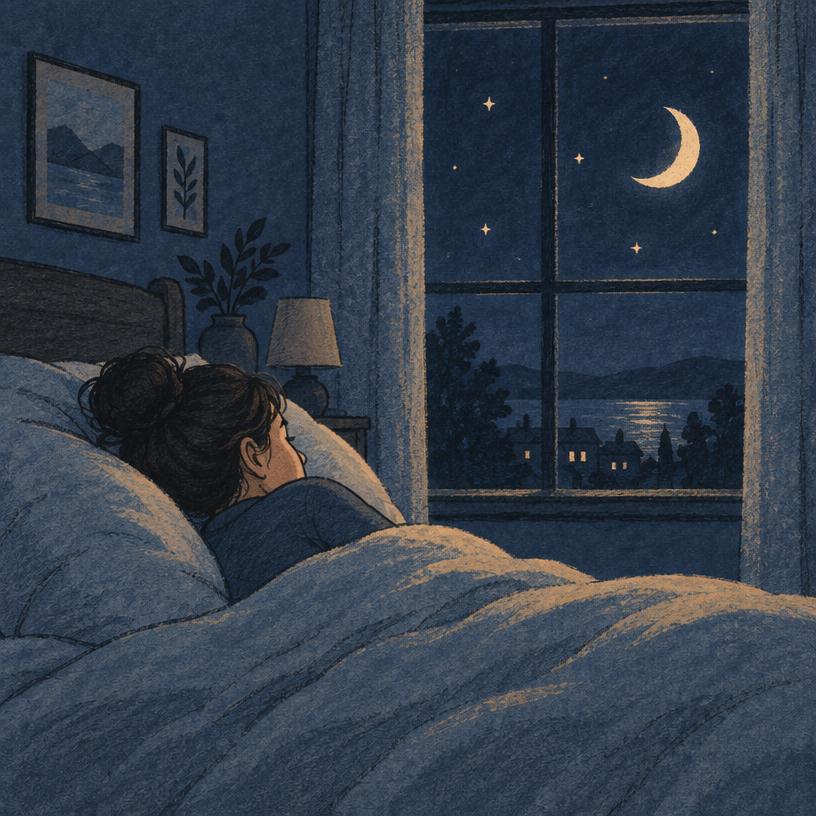
You wake, the house is silent, and within seconds your mind is racing through every bill, every conversation, every what-if. If that's you, you're far from alone — and there are good reasons it happens.
Why everything feels bigger at night
In the dark there's nothing to distract your attention, so worries get your full focus. You're also tired, and a tired brain reacts more strongly to stress and is less able to put things in proportion.
Nothing has actually changed since bedtime. The problem isn't bigger — your ability to hold it is smaller for a few hours. That's worth reminding yourself: this is a 2am thought, not a daytime truth.
What your body is doing
When a worry registers as a threat, your body's alarm switches on: adrenaline rises, your heart beats faster, breathing gets quicker and higher. That's why you can feel wide awake and buzzing even though you're exhausted.
It's uncomfortable but not dangerous. The alarm is designed to settle once it gets the message that you're safe.
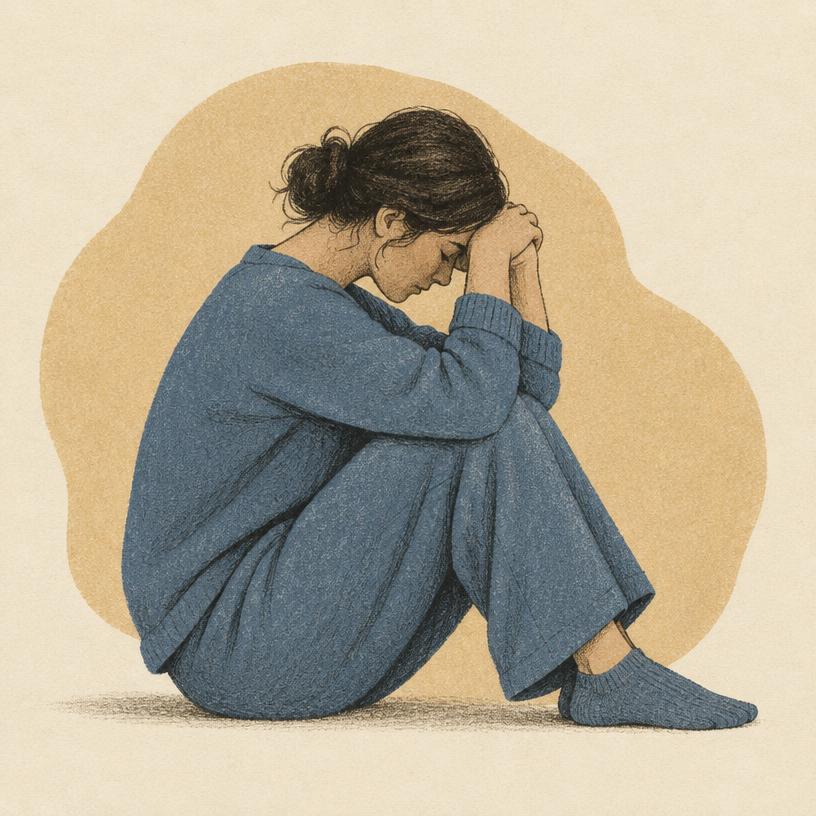
Gentle things that help
Try not to fight sleep — trying hard to sleep tends to keep you awake. Instead, aim simply to rest.
- Make your out-breath longer than your in-breath for a minute or two.
- Write the worry down so your brain knows it's been held somewhere.
- If you've been awake a long while, get up for a few minutes in dim light, then return.
- Keep the phone dim and away from news and messages.
- Name five things you can feel — the pillow, the duvet, your feet.
If you pray
Many people find a short honest prayer more helpful than a long one at night: "I can't fix this now. Please hold it until morning." Psalm 4 and Psalm 121 are passages people often return to in sleepless hours — you can read them in the app's Bible.

How Behind 6 helps at night
Night mode dims everything and offers a slow, quiet chat with the companion, one gentle step at a time. My Safe Place lets you sit by a fire with rain on the window. In the morning, a quick check-in records how the night went, so you can notice patterns over time.
When to get more help
If you regularly struggle to sleep for weeks, or night-time anxiety is affecting your days, talk to your GP or doctor. It's a common reason to ask for help and there are effective treatments.
Sources and further reading
- NHS Every Mind Matters — Sleep
- Harvard Health — Understanding the stress response
- NHS — Breathing exercises for stress
This article is general information, not medical advice. If you're worried about your health, talk to a doctor.